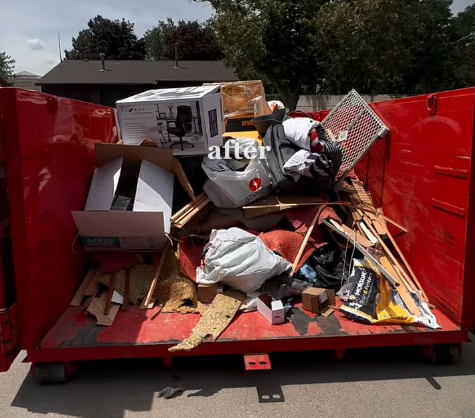
Put heavy, flat items on the floor first and spread them across the full length. Put light, bulky items on top. Break everything down so there are no air pockets, and stop when the load is level with the top rail. Never heap debris above the walls. Watch weight as closely as height, because a dumpster can be overweight long before it looks full.
What “loading a roll-off” really means
A roll-off is an open-top steel container delivered on a truck and pulled away on the same truck when you’re done. That last part is why loading matters. The driver has to chain down the load, haul it, and dump it at a scale-equipped disposal site. A load that’s lopsided, heaped, or too heavy is a problem for the truck, not just for your bill.
Why loading order matters
Before a roll-off leaves your property, the driver looks at it. If debris sticks up above the walls, the load generally can’t be secured. Many haulers will ask you to pull material out first, and some charge for a return trip.
Bad loading usually causes three problems: an unbalanced load, wasted space, and fees you didn’t expect. All three are preventable.
Prep before the dumpster arrives
Most loading problems start in the driveway, before the first piece of debris goes in. Ten minutes of prep helps.
- Pick a level, firm spot. Soft ground can let a container sink or shift.
- Walk the drop-off path. Low branches, wires, and parked cars block delivery and pickup.
- Protect the driveway. Plywood or boards under the rails spread the weight.
- Sort as you go. Keep dense material (concrete, brick, tile) separate from bulky household junk.
- Read the prohibited list. Paint, tires, batteries, and propane stay out.
How to load a roll-off, step by step
- Heavy and flat first. Spread it over the full length of the floor so the weight stays centered and the container rides stable on the truck.
- Work from the walls inward. Fill the corners and edges first so nothing slides.
- Break things down. Flatten boxes, take furniture apart, and cut long lumber and branches.
- Fill the hollow spots. Stuff small debris into dressers, bins, and gaps. Air takes up space you’re paying for.
- Stand flat items on edge. Drywall and panels pack tighter upright than stacked flat.
- Light stuff goes on top. Cardboard, insulation, and bagged trash go in last.
- Stop at the fill line. Keep the load level with the top rail. If you’re unsure, stop a little below it.
Walk-in door: If your container has one, use it for heavy items instead of lifting them over the wall. Not every unit has a door, so ask when you book.
Overfilled vs. overweight: two separate limits
These are different problems with different consequences.
| Overfill (height) | Overweight (weight) | |
|---|---|---|
| What it means | Debris above the walls or fill line | Total weight above the included tonnage |
| Typical consequence | Excess removed, or a possible return-trip charge | Per-ton charge based on the landfill scale ticket |
| How to avoid it | Keep the load level | Estimate weight before you load |
A bigger dumpster doesn’t solve a weight problem. Included tonnage varies by hauler and size, and published figures from different sources don’t always agree. Before you book, ask what weight is included and what the overage rate is per ton.
Why is my dumpster overweight when it isn’t full? Dense materials such as concrete, brick, soil, and shingles hit the weight limit before they fill the box.
Heavy debris and roofing jobs
Roofing is where weight surprises happen most. Based on GAF’s published figures, one layer of three-tab shingles runs roughly 2,400 pounds per 1,000 square feet of roof. Architectural shingles run about 4,200 pounds.
Illustrative example, not a customer story: A roofer tears off a 30-square roof, about 3,000 square feet. By that math, one layer is roughly 3.6 tons of three-tab or 6.3 tons of architectural shingles. Actual loads vary with the number of layers and the waste, but the point holds. Shingles can exceed a typical allowance while the container looks half empty.
For concrete, brick, or dirt:
- Spread it across the floor instead of mounding it in one spot.
- Ask whether heavy material should go in its own container instead of being mixed with household debris.
- Consider a smaller size. A 10-yard is a good fit for dense material because it limits how much weight you can stack in.
Common mistakes (and how to spot them early)
- Choosing by looks instead of weight. Think in pounds, not just cubic yards.
- Picking too small a box. It leads to heaping or a second haul.
- Mounding the load. Anything above the walls can mean a refused pickup.
- Tossing heavy and light material in randomly. It makes the load lopsided and unstable.
- Throwing in prohibited items. Wet paint, tires, batteries, and propane can trigger surcharges or a refused load.
- Waiting until the last day. If your rental period ends, extension fees may apply.
- Blocking the truck. A parked car or a low branch on pickup day can cause a dry run.
Warning sign to watch for: if the container is more than half full after the first day of a heavy job, stop and recheck your size and weight estimate before the pile gets tall.
Staying safe while you load
- Wear gloves, boots, eye protection, and long sleeves. Add a dust mask for dusty debris.
- Lift with your legs, share heavy pieces, and avoid twisting.
- Never jump into the container. If you must climb, use a stable ladder with a spotter.
- Bundle nails and sharp debris before tossing them in.
- Keep kids and pets well away during delivery, loading, and pickup.
- Heat: Southeast Texas summers add real risk to physical work. Take water and shade breaks.
Loading tips for Sugar Land and Fort Bend County
Rain adds weight. Wet soil, drywall, wood, and shingles weigh more than dry. If rain is in the forecast, cover the load or schedule pickup sooner.
Know where prohibited items go. The Fort Bend County Recycling Center at 1200 Blume Road in Rosenberg accepts household hazardous waste such as oil-based paints and thinners.
- It requires proof of Fort Bend residency.
- It does not accept soil or dirt, or business, commercial, and agricultural waste.
- Check current hours and fees before you go.
Check permit and placement rules. A container on a public street or right-of-way may need a city permit. The City of Sugar Land lists a standard right-of-way permit fee, but that page doesn’t specifically address dumpsters, so confirm your situation with the City. HOA rules on visibility and duration vary by community, so check yours too.
Commercial and temporary projects have extra rules. Sugar Land names Republic Services as its exclusive franchise hauler for commercial solid waste, including temporary projects. The City has also posted a notice about changing the exception for temporary construction and demolition work. If your project is commercial, ask your provider whether they can service your address.
Which size fits your project?
We offer 10-, 20-, and 30-yard roll-offs.
| Size | Best for | Starting price* (7-day rental) |
|---|---|---|
| 10-yard | Small cleanouts; a good option for dense material like concrete | $425 |
| 20-yard | Remodels and bigger cleanouts; our site says it holds roughly six pickup truck loads | $575 |
| 30-yard | Large cleanouts and bulky or heavy projects | $725 |
*Starting prices are listed on our site. Your final cost depends on size, rental length, included weight, material type, overage, and any extension days. Ask for an all-in quote before you commit.
Illustrative example: A homeowner clearing a garage and a few old cabinets assumes a 10-yard will do. Photos or a quick call may show the volume is closer to a 20. Checking first costs nothing. Guessing wrong can mean a second haul.
When to call your rental provider first
Call before booking if you’re unsure about:
- Size, especially with mixed or heavy debris.
- Included tonnage and overage rates.
- Whether a specific item is allowed.
- Permits, HOA rules, or street placement.
- Whether your address can be serviced.
- Delivery access, such as narrow drives or overhead lines.
- Extending your rental.
Also call early if the container is filling faster than expected. It’s easier to schedule a swap than to fix a heaped load.
Quick answers: dumpster loading FAQs
How full can I fill a dumpster?
Level with the top rail or fill line, with nothing above it.
What happens if I overfill it?
Excess has to come out before pickup. Ask your provider about their policy and any return-trip charges.
What happens if the dumpster is overweight?
You’re typically charged per ton over the included amount, based on the landfill scale ticket.
Can I put concrete in with regular trash?
Often not recommended. Ask before booking.
How long can I keep the dumpster?
Seven days is standard for us. Ask about extension rates.
Can I put paint in a dumpster?
Not wet paint. Use the county household hazardous waste option.
How much does a dumpster rental cost in Sugar Land?
Our starting prices are $425, $575, and $725 for 10-, 20-, and 30-yard sizes with a 7-day rental. Your final cost depends on weight, material, and rental length, so ask for an all-in quote.
Do I need a permit for a dumpster in Sugar Land?
It depends on placement. A driveway and a public street are treated differently, so confirm with the City.
Bottom line
Load heavy and flat first, keep the load level, and watch the weight as closely as the height. Most extra charges come from skipped planning, not bad luck.
Not sure which size you need? Call Sugar Land Dumpster Rental at (832) 263-0070 or request a quote, and we’ll help you match the container to your project.